
Gas Fireplace Acting Up? 7 Signs It Needs Service (and Which Ones Mean Stop)
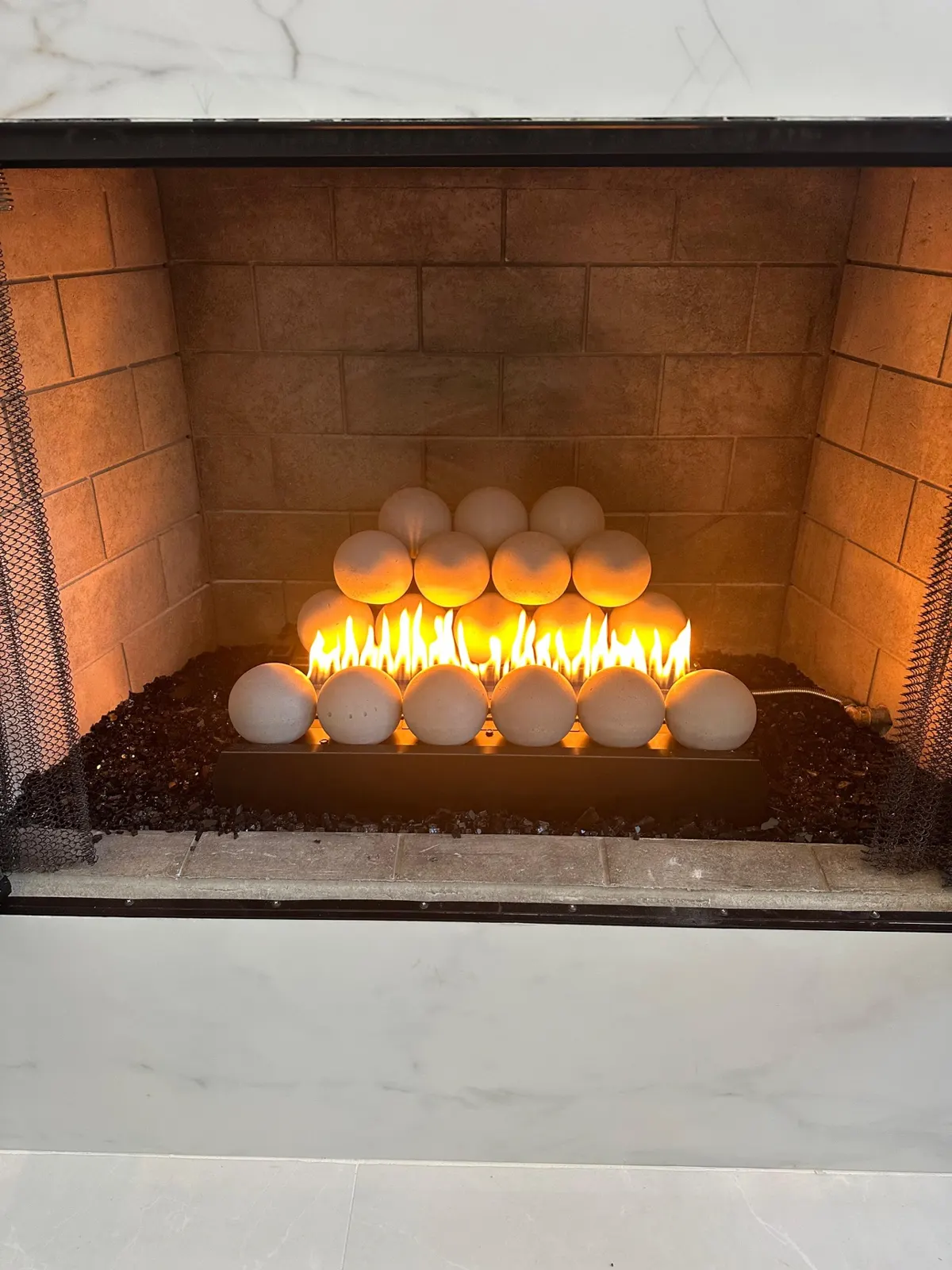
The promise of a gas fireplace is fire without effort. So when it starts demanding effort — three tries on the remote, a pilot that dies overnight, glass that fogs with soot — something inside needs attention. Gas appliances are safe when maintained and unforgiving when ignored. These are the seven signs we see most in New Jersey homes, what each one usually means, and the two that mean stop using it until a professional has looked.
1. The pilot will not stay lit
The classic. A pilot that lights, then dies when you release the knob or a few hours later, is most often a worn thermocouple or a weak thermopile — the little generators that prove the flame and keep the gas valve open. They are wear parts, they are replaceable in a normal service visit, and they almost never fix themselves.
2. Clicking, clicking — no ignition
The igniter is sparking but the burner never catches. Check the painfully simple first: batteries. The receiver box inside the fireplace and many remotes run on AAs, and dead batteries cause more "broken fireplace" calls than any mechanical failure. If batteries are fresh, the causes move to a clogged pilot orifice, a weak igniter or a valve issue — service territory.
3. Soot on the glass and logs
A light haze on the glass over a season is normal; black soot building in weeks is not. The number one cause is logs that have shifted out of their exact positions — gas logs are arranged to keep flame off the ceramic, and a bumped log changes everything. A dirty burner is the other usual suspect. Either way: cleaning plus correct log placement, then a combustion check.
4. The delayed "whoomph"
You press the button, nothing happens, then the fireplace lights with a thump. Gas is pooling before it ignites because the burner ports are dirty or the ignition is slow. This is a stop-and-call sign — delayed ignition gets worse, not better, and it is hard on the glass and the unit.
5. It shuts off after ten or twenty minutes
Often a failing thermopile that cannot hold the valve open once everything heats up, or a safety sensor doing its job because venting is restricted. A fireplace that quits mid-evening is asking for a service visit, not a workaround.
6. You smell gas
Stop. Do not use the fireplace, do not flip switches, leave the house if the smell is strong and call your gas utility or 911 from outside. A faint odor at startup that a technician finds at a fitting is one thing; an unexplained gas smell is an emergency, full stop. No article advice overrides that.
7. The flames look wrong
Healthy gas flames are mostly blue with yellow tips. Tall, lazy, all-yellow flames that lick and soot mean incomplete combustion — too little air, dirty ports, wrong log placement. Beyond the mess, incomplete combustion is where carbon monoxide comes from. If your home does not have a CO detector on the fireplace level, that is today's project — and book the service visit while you are at it.
The bottom line
Most gas fireplace problems are small parts and thorough cleaning — if they are caught when the signs start. Eagle Chimney Services services and repairs gas fireplaces across the New Jersey suburbs and Shore: pilot and ignition repair, burner cleaning, log correction, safety testing. Call (855) 424-6217 before the coldest week of the year picks your fireplace to quit.
Need a Hand With Your Chimney?
Call (855) 424-6217 — phones answered 24/7, service Sunday through Friday across 163 New Jersey communities.